As a kid, Lily Riefkohl couldn’t get through a book. She would read the same page three times and still not know what happened.
Her sister became her secret weapon. Her sister would read the chapters and tell her the story, and Riefkohl would walk into class and ace the test. Nobody knew. She didn’t have a name for it yet, but she says she has ADHD.
What she did notice, even then, was that it wasn’t just her. It was the room. In some spaces her mind scattered in every direction. In others, she could suddenly focus and feel energized. “That question of why never left me,” she says.
It led her to two master’s degrees, one in architecture and one in interior design, with a focus on design psychology. Then it led to a career. Riefkohl went on to design more than 35 ABA therapy clinics across the country, and she says she watched the environment change how autistic children responded in therapy. Then she was laid off. It could have been the end of something, she says, but it felt like a door opening. In July 2025, she founded Sensory Interiors.
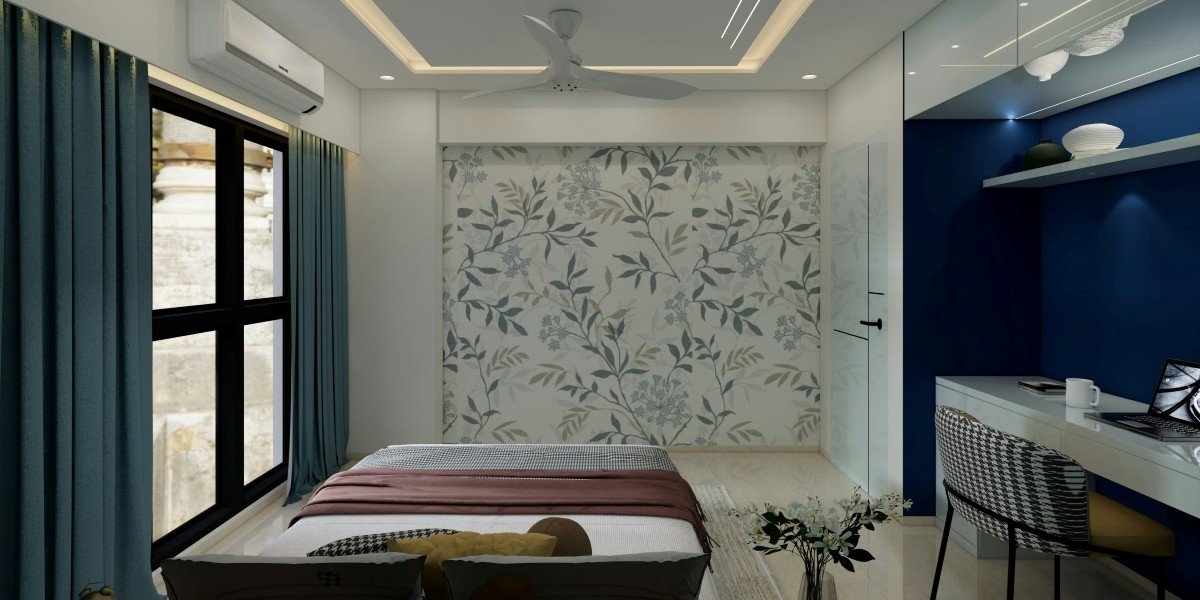
The company is based in Fort Lauderdale, Florida, and serves clients nationwide, across the United States and its territories. It designs residential and commercial spaces for autistic and other neurodivergent people. Every space is tailored to the sensory needs of the people who use it, and it is designed around eight senses instead of five, with special focus on the vestibular, proprioceptive, and interoceptive senses. The goal, Riefkohl says, is regulation: giving each person what their nervous system needs, whether that is less input or more.
The problem she is solving is simple to state. Most spaces aren’t designed with the nervous system in mind, she says, so for autistic and other neurodivergent minds, a room can trigger overwhelm instead of support. Sensory Interiors fills that gap. In her words, it is a specialist in a field where almost no designers understand sensory needs.
Her biggest edge is personal. “I’m not just designing for neurodivergent people. I’m one of them,” she says. She has also sat with clinical directors, behavior analysts, therapists, and parents, and watched how kids respond to a space. So when she designs, she says, it comes from experience and research, “not from what looks nice on Instagram.”
The firm treats sensory design as the whole job. Riefkohl notes that a lot of designers now say they do “sensory-friendly,” but she says that often means soft colors and a beanbag in the corner. Her team interviews the client and the end user, and observes, to build a tailored plan for every project. Two autistic kids, she points out, can need completely opposite things. She has also developed her own sensory design methodology, built from her years of working inside clinics. And she says beautiful and functional don’t have to compete. Her background is in high-end residential design, and she brings the same level of detail to every project.
The hardest part has been awareness. Most people don’t know sensory design exists, she says. When she tells someone she is an interior designer, they picture pillows and paint colors. When she says sensory design, she gets a confused look. So she has had to become an educator as much as a designer. She explains it in ways people instantly relate to: trying to hold a conversation in a loud restaurant, or walking into a crowded store with loud music and strong smells. “Once people connect it to their own experience, they get it.”
Cost is another hurdle. Many clinics and schools work with tight budgets, she says, and assume this kind of design is expensive. She argues it is a necessity, not a luxury, and she says the results speak for themselves. In clinics, she says that means calmer kids, better sessions, and happier staff. At home, it means more focused children and a better quality of life for the whole family.
She has also had to learn how to run a business. Riefkohl says she started with no idea how and tried to multitask her way through everything, which didn’t work. She has since built systems, leaned on her team, and designed her own workspace to support her focus. “I practice what I preach.”
Recognition has come quickly. Within its first year, Riefkohl says, the company earned national media coverage, and it was named Best of Best 2025 as the best neurodivergent interior design firm in South Florida. She is proud of her team, which includes an interior designer, a junior designer, a project manager, and a director of procurement. She also has a partnership with a university in Colombia to train interns, and students have asked to use her projects as case studies for capstone work. One recently asked her to mentor a thesis.
What comes next has three parts. First is education: an online course called “Optimizing Interior Design for Children with Autism,” aimed at helping families create sensory-supportive spaces at home even if they can’t hire a designer. Second is expanding into schools, hospitality, workplaces, retail, and public spaces. Third is growing the team and the national reach. Her long-term goal is to make sensory-informed design the standard, not the exception. Her dream project? An airport.
She is also writing a novel called “It Was the Room,” a literary story set in New York City and told through twelve characters with different neurodivergent profiles. The idea behind it is the one behind her work. The spaces we live in shape what we’re able to feel and who we’re able to become.
Riefkohl recently filmed with The Blox, a gamified educational bootcamp for entrepreneurs, for a documentary set to air in the near future.
She was the kid who noticed the room. Now she designs it.