US Business News

Paul Davis Restoration of Lynchburg, Roanoke & Southside VA Aims to Set a New Standard for 24/7, Full-Service Disaster Recovery in the Local Area

By: Olivia Ramirez

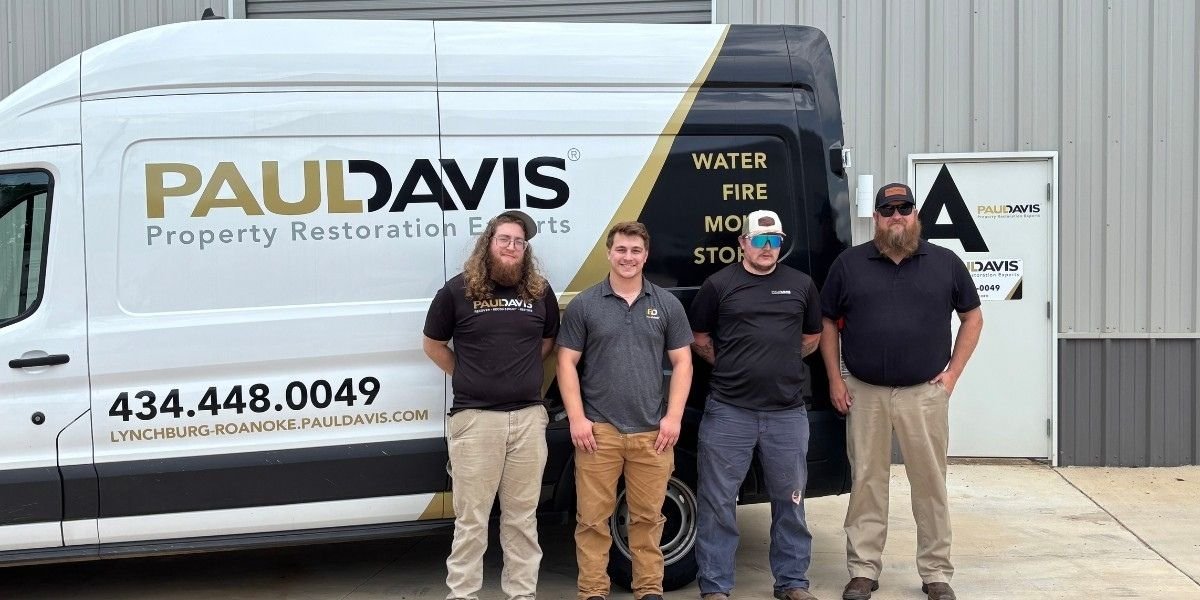
When a burst pipe, kitchen fire, storm surge, or mold outbreak disrupts life, residents and businesses across Central and Southside Virginia look for a partner who can respond promptly, coordinate all aspects, and guide them through to a full recovery. This is where Paul Davis Restoration of Lynchburg, Roanoke & Southside VA aims to provide peace of mind. The locally owned team combines round-the-clock emergency response with comprehensive services that support projects from the first phone call to the final walkthrough, all backed by a nationally trusted brand.

A One-Stop Partner From Emergency to Complete Reconstruction

Disasters can come in many forms, which is why this team addresses the full spectrum of recovery. Services include rapid water and fire mitigation, smoke and odor removal, mold assessment and remediation, contents cleaning and inventory, and licensed reconstruction for both residential and commercial losses. Clients don’t need to coordinate multiple contractors or retell their story to new crews. One accountable team evaluates the problem, stabilizes the site, documents the loss, restores the structure and contents, and returns the keys when it is completed. This end-to-end model can reduce delays, lower the chance of errors, and create a single, reliable point of contact.

The company’s process is simple and disciplined: respond, resolve, restore, and return. That means fast contact after the call, arrival on site within hours in most cases, immediate stabilization of damage to limit secondary loss, and a clear plan that carries through to rebuild. For homeowners, that helps turn chaos into a manageable plan. For property managers and business owners, it can shorten downtime and help protect revenue.

Insurance Expertise That Reduces Stress and Speeds Decisions

Insurance paperwork and approvals can often become the slowest part of a claim. Paul Davis Restoration of Lynchburg, Roanoke & Southside VA integrates the insurance process into its daily workflow. The team documents every step with photos, moisture readings, and itemized scopes, then collaborates with carriers using standardized pricing and transparent project files. That helps reduce back-and-forth, supports faster approvals, and gives clients confidence that there will be no surprises later. Customers stay informed with regular updates and a single project manager who explains next steps in clear, understandable language.

Local Heart, National Strength

Although backed by a network with more than five decades in the industry, this franchise is owned and operated by people who live and invest in the communities they serve. That local accountability shows up in the details: careful protection of unaffected areas, clean and courteous crews, and a culture that treats customers like family. Team members actively participate in community events, answer questions before and after projects are complete, and share practical prevention tips so neighbors can help protect their homes and businesses long after the trucks pull away.

Certified Quality, Clear Communication, Real Accountability

Quality matters when decisions must be made quickly. The team’s technicians apply IICRC-certified methods and advanced technology such as thermal imaging for moisture detection and electronic claims documentation for carrier collaboration. Every project is anchored by workmanship standards, safety protocols, and tidy, organized job sites that respect the property as if it were their own. Clients receive schedules, progress check-ins, and a walkthrough at completion to confirm that the result matches the plan.

The franchise also supports weekend appointments by request, offers free consultations, and provides discounts where applicable, including military discounts. Those practical options reflect a simple commitment: professional service that is both compassionate and precise.

Voices From the Community

Local feedback underscores the team’s responsiveness and care when it matters most. One homeowner shared how difficult it can be to even get a call back these days, then noted how promptly the Paul Davis team responded: “I recently discussed our need for some bathroom remodeling and repair work with Jay. He was so knowledgeable and friendly. We will definitely be getting estimates from this company. I appreciated how responsive Jay was when it is often hard to get anyone to call you back.” — Russanna Cook

Another client described a high-stakes timing issue and the relief that followed: “We had a leak in our basement just before heading out on vacation. We called them, and they were at the house the same day. They took care of everything while we were away, giving us peace of mind.” — Francisco Negron

Commercial clients echo the same theme, pointing to clear communication and thorough work on larger, complex losses. “Their response time was extremely quick, and they were very communicative and thorough throughout the process.” — Luke Dykeman

Community partners also highlight the human side of restoration. “The team radiates compassion, calm, and genuine care, making her exactly who you would want by your side on your toughest days.” — Micah Lee

When Minutes Matter, Here Is How to Get Help

If you are facing water, fire, mold, or storm damage, fast action can help protect your property and your health. Call the local team for immediate guidance, on-site assessment, and a clear plan that fits your home or business. Start by visiting Paul Davis Restoration of Lynchburg, Roanoke & Southside VA to request service. For practical tips and before-and-after examples, explore the YouTube channel, and stay connected with community updates on Facebook.

About Paul Davis Restoration of Lynchburg, Roanoke & Southside VA

Paul Davis Restoration of Lynchburg, Roanoke & Southside VA provides full-service disaster mitigation and reconstruction for residential and commercial properties. Services include water and fire damage cleanup, smoke and odor removal, mold remediation, contents restoration, and licensed rebuild. The locally owned franchise combines IICRC-certified quality with national resources, real-time documentation for insurers, and a customer-first culture that values empathy, education, and accountability. To learn more or to request a free consultation, visit the company website.

Wealth Transfer Creates Record Number of New Billionaires

Recent reports reveal a striking increase in the number of billionaires made through inheritance. Over the past year, 91 heirs collectively received $298 billion in wealth transfers, marking the largest surge since records began in 2015. This represents a major shift in the distribution of wealth globally, with generational wealth playing a more significant role in the billionaire class.

While entrepreneurs continue to create wealth through innovation, inheritance has now become a primary pathway to billionaire status. This change in the wealth landscape underscores how inherited fortunes are reshaping industries and influencing global markets. As the number of inherited billionaires continues to rise, questions about wealth distribution and the future of such transfers are becoming increasingly relevant.

The growing impact of inherited wealth reflects broader trends in wealth concentration and the transfer of assets across generations. This change is a reminder that while entrepreneurship remains a dominant force in wealth creation, the power of inheritance is undeniable in shaping today’s wealthiest individuals.

Inheritance Becomes a Primary Pathway to Billionaire Status

Inheritance has always been a significant factor in wealth accumulation, but recent figures suggest that it is now a dominant force. The $298 billion transferred in 2025 represents a more than 30% increase from the previous year. This shift marks a change in how people are becoming billionaires, with more individuals receiving wealth through succession than through entrepreneurship.

Wealth Transfer Creates Record Number of New Billionaires

Photo Credit: Unsplash.com

The growing number of heirs entering the billionaire ranks highlights the aging of the super-rich and the increasing size of the fortunes they have accumulated. Families are passing down vast fortunes, making it easier for the next generation to step into billionaire status without having to build a fortune from scratch. The impact of these wealth transfers is reshaping the billionaire landscape, further concentrating wealth among a select group of individuals.

The significance of this shift is profound, not only in terms of the individuals affected but also in how wealth transfer is now seen as a major driver of wealth creation. The increase in inherited wealth raises important questions about how future generations will use their resources and what role inheritance will play in shaping the future economy.

Self-Made Billionaires Versus Inherited Fortunes

Despite the growing influence of inheritance, self-made billionaires continue to be a significant force in wealth creation. Nearly 200 individuals joined the billionaire ranks through entrepreneurial efforts in the past year, collectively adding over $380 billion in wealth. This highlights the ongoing importance of entrepreneurship in shaping the world’s wealthiest individuals.

The distinction between self-made and inherited billionaires often sparks debates about the value of hard work and innovation versus inherited privilege. While self-made billionaires are often celebrated for their ability to innovate and take risks, inherited wealth is sometimes viewed with skepticism, especially when it involves little personal effort. Both groups, however, contribute significantly to the growth of global wealth and influence.

This growing divide between self-made and inherited wealth prompts a reassessment of what it means to be truly wealthy. As inherited fortunes rise, society’s perception of wealth creation and the value of entrepreneurship will continue to evolve. Both sources of wealth will play critical roles in shaping the future of global markets.

The Global Influence of Wealth Transfer

The impact of wealth transfer extends beyond individual fortunes and has profound implications on the global economy. Billionaires collectively now hold $15.8 trillion in wealth, which exceeds the combined GDP of several major economies. This concentration of resources gives the wealthiest individuals significant power in shaping markets, philanthropy, and cultural movements.

An estimated $5.9 trillion is expected to be transferred within billionaire families over the next 15 years, ensuring that inherited wealth will remain a major force in shaping the billionaire class. This projection highlights the scale of wealth transfer and its potential influence on global financial systems. The magnitude of these transfers raises questions about the long-term effects on wealth inequality and the redistribution of wealth across generations.

As inherited wealth continues to grow, its impact on global markets and society at large will only become more pronounced. Understanding how these transfers shape the future of wealth management, business, and philanthropy is crucial as we move toward a new era of wealth distribution.

The Future of Wealth Transfer: Challenges and Opportunities

The record surge in inherited billionaires marks the beginning of a new era of wealth transfer, but this shift brings with it both challenges and opportunities. As older generations pass down their fortunes, the responsibility of managing and using that wealth falls to the next generation. How these heirs choose to use their inherited fortunes will shape not only the future of their family businesses but also the broader economy.

Heirs face the challenge of maintaining or growing their inherited wealth while navigating an increasingly complex global economy. They must balance preserving family legacies with innovating and adapting to new market conditions. The decisions made in the coming years will determine whether inherited wealth continues to shape industries or whether it will play a more passive role in future economic development.

The future of wealth transfer will depend on the choices made by heirs and how they navigate their inherited fortunes. Their actions will influence not only their family businesses but also broader trends in wealth distribution, market influence, and global power dynamics.

THE HIDDEN PARASITE IN BUSINESS: Why Leaders Are Turning to Tongue to Understand the Linguistic Forces Distorting Decision-Making

In the business world, many leaders focus on data, talent, risk, and execution. They study markets, monitor competitors, and run forecasts to simulate outcomes.

What is often overlooked, however, is the invisible variable running through all of these processes: the language used to describe them.

According to Tongue: A Cognitive Hazard — a short, thought-provoking book by behavioral expert Chase Hughes — language doesn’t simply shape communication. It may, in fact, behave like a cognitive parasite.

Not in a figurative sense.

But functionally.

A self-replicating system that inserts itself between experience and interpretation, assigning labels that can create the illusion of understanding while quietly influencing perception, emotion, and executive judgment.

The business world is responding to this idea — not because the book offers leadership tips, but because it brings attention to a blind spot that many leaders may not have been aware of.

Language Inserts Itself Before Thought — and Execs Are Noticing

Decision-making doesn’t always start with data.

It can start with language:

  • how a problem is framed

  • how a metric is described

  • how a risk is named

  • how a team talks about a conflict

  • how a CEO phrases a vision

  • how investors interpret a pitch

In every case, language may intervene before the brain evaluates the content.

Hughes suggests that this “intervention” can be parasitic:

  • it simplifies reality into categories

  • it creates emotional anchors

  • it hides biases within vocabulary

  • it can produce a sense of false clarity

  • it may manufacture confidence

  • it influences alignment before anyone realizes it

  • it may shape decision pathways invisibly

Leaders might believe they’re choosing deliberately.

However, they could be choosing linguistically.

TONGUE makes this distinction uncomfortably clear.

A Book That Doesn’t Teach — It Exposes

Executives expecting a traditional leadership book might not find what they anticipated.
TONGUE is brief — just over 100 pages — and its structure is intentionally disruptive.
The pages behave almost like cognitive tripwires:

  • abrupt spacing

  • silence as meaning

  • rhythm breaks

  • uneven pacing

  • fragments arranged to provoke—not persuade

The effect is that readers may feel their internal language mechanisms misfire, stall, or overcorrect.

In business terms, the book doesn’t simply “explain the parasite.”

It may reveal it by interfering with it.

That’s why some leaders call it “the only book that makes you aware of how you’re thinking, not just what you’re thinking.”

Why Leaders and Operators Are Paying Attention

Executives across industries — tech, finance, consulting, healthcare, sales, and security — have reported similar reactions:

  1. Increased clarity in conflict: They start noticing the difference between what someone says and the hidden assumptions inside the phrasing.

  2. Better reading of team dynamics: Language can reveal power imbalances, uncertainty, avoidance, insecurity, dominance, and hidden resistance.

  3. Sharper decision-making: Leaders might catch themselves reacting to phrasing instead of reality.

  4. Greater awareness of manipulation: They may see how certain words can hijack urgency, loyalty, guilt, or compliance.

  5. Cleaner internal communication: Once leaders recognize the parasite, they could remove performative language and speak with more precision.

These shifts aren’t taught directly by the book — they’re triggered by it.

The Parasite Model Explained (Without the Theory)

The parasite metaphor resonates in business because it resembles the way bad code hijacks a system.
Language:

  • replicates without permission

  • inserts itself into cognitive processes

  • creates predictable distortions

  • influences emotional state

  • shapes interpretation before objective analysis

  • resists scrutiny because it feels “normal”

In a corporate environment, this shows up as:

  • the illusion of alignment

  • meetings that talk in abstractions

  • strategic decisions influenced by subtle phrasing

  • employees responding emotionally to labels, not facts

  • leaders potentially misled by their own narratives

Hughes argues that industries don’t suffer from “communication problems.”

They may suffer from linguistic parasites that mislabel reality and distort judgment.

TONGUE brings these distortions into view.

Why the Style of the Book Matters to Business Readers

Businesses are accustomed to frameworks, step-by-step instructions, and easily digestible takeaways.

TONGUE offers none of that.

The structure itself is the tool:

  • short

  • sharp

  • inconsistent

  • interruptive

  • a little uncomfortable

This design might force the reader’s cognitive system to temporarily detach from its normal language patterns.

Leaders often report:

  • decreased mental noise

  • increased precision

  • an awareness of how words alter emotional responses

  • more objective observation

  • clearer thinking

In business psychology, this resembles a “pattern interrupt” — the moment when automatic processes pause long enough for new perception to emerge.

But the book accomplishes this without explicitly telling the reader what it’s doing.

It simply does it.

Why US Business Leaders Are Talking About It

Executives who typically avoid abstract or artistic books are recommending Tongue because it seems to affect real performance variables:

  • communication clarity

  • negotiation accuracy

  • morale

  • conflict resolution

  • leadership presence

  • personal awareness

  • cultural alignment

Several founders have described it as:

  • “the missing chapter in every leadership book.”

  • “a debugging tool for human communication.”

  • “a perception reset.”

And one investor summed it up simply:

“It reveals the thing I didn’t know I was influenced by.”

The Business Case for Understanding the Parasite

Companies invest millions into culture, communication, leadership training, and strategic alignment — but language is the substrate on which all of these things operate.

If the substrate is distorted, everything built on top of it may inherit the distortion.

TONGUE resonates because it’s not selling a method.

It’s removing a blind spot.

Leaders who see the parasite could become harder to manipulate, quicker to identify bias, and more precise in how they steer teams.

Executives who ignore it may remain vulnerable to linguistic drift — and that drift might show up in strategy, culture, and execution.

The Bottom Line

TONGUE isn’t just another business book, but it’s rapidly becoming one of the most influential leadership tools of the year for a simple reason:

It reveals the hidden operating system everyone in business is using without knowing it.

Language isn’t just a medium.

It’s a parasite steering perception.

Leaders who understand that may gain clarity.

Leaders who don’t might remain unconsciously steered by the very thing they trust most — their own words.

Paul Davis Restoration of DuPage Reimagines Property Restoration For DuPage County Homeowners

By: Tyler Ward

When water, fire, storms, or unexpected accidents turn a normal day upside down, property owners in DuPage County need more than a contractor. They need a steady hand, clear guidance, and a team they can trust to put everything back together. That is where Paul Davis Restoration of DuPage steps in, combining decades of experience with a people-first approach that restores both property and peace of mind.

A Locally Rooted Team With National Strength

Paul Davis Restoration of DuPage has been serving the community for nearly twenty years, and today it operates under new local leadership that brings fresh energy without losing the deep expertise customers rely on. The company is locally owned and family operated, and its team members live, work, and raise their families in the same neighborhoods they serve. Backed by the national Paul Davis network, the DuPage office blends the responsiveness and warmth of a neighborhood company with the resources, training, and innovation of an industry leader. Collectively, the team brings more than 140 years of experience across water mitigation, reconstruction, contents cleaning, trauma work, and full-scale restoration.

This combination of local roots and national strength allows Paul Davis of DuPage to serve the entire county instead of being confined to narrow territories. The team understands the character of DuPage homes and businesses, from older properties with unique craftsmanship to newer, technology-heavy spaces. That local knowledge, paired with advanced tools like 3D imaging, moisture mapping, and real-time job tracking, helps ensure that every job is assessed accurately and handled efficiently.

From Emergency Response To Full Reconstruction

Disasters rarely arrive on a convenient schedule, which is why Paul Davis Restoration of DuPage provides true 24/7 emergency service with a typical on-site response time of 1 to 2 hours. Certified mitigation specialists arrive ready to stabilize the scene, prevent further damage, and start the recovery process immediately. Whether the issue is a burst pipe, a flooded basement, smoke and soot after a fire, storm damage, or the need for sensitive trauma cleanup, the same consistent team guides the process from the first call through final reconstruction.

Because the DuPage office manages insurance claims daily, customers are not left to navigate confusing paperwork on their own. The staff understands the expectations of carriers, speaks the language of adjusters, and documents every step with industry-leading technology. That clarity helps move projects forward, reduces delays, and removes one of the biggest sources of stress for homeowners and business owners.

IICRC certification, in-house carpenters, and a trusted network of specialty trade partners enable Paul Davis of DuPage to handle complex projects without sacrificing quality. From carefully drying hardwood floors to rebuilding damaged rooms, the focus is always on craftsmanship, communication, and respect for the property.

A Preservation Mindset In A Demolition Heavy Industry

Many customers come to restoration companies worried that everything will be ripped out, leaving them with a bigger mess and a higher bill. Paul Davis Restoration of DuPage takes a different approach. The team operates with a preservation mindset, working to save structures and finishes whenever it is safe and possible to do so. By focusing on precision, moisture science, and accurate scoping rather than unnecessary demolition, they help protect what matters most while also reducing disruption and cost.

That philosophy extends to pricing. Instead of promising the cheapest quote, Paul Davis of DuPage aims to provide the smartest one. Thorough inspection, detailed documentation, and a commitment to doing things right the first time mean fewer surprises and fewer callbacks. It is an approach that benefits customers, insurers, and the long-term health of the property.

Neighbors Helping Neighbors In Their Stressful Moments

What truly sets Paul Davis Restoration of DuPage apart is how personally the team takes each job. Customers are not just claiming numbers. They are neighbors who have experienced something stressful, frightening, or deeply disruptive. Reviews from across DuPage County reflect a consistent theme of kindness, patience, and above-and-beyond service.

One homeowner, Susan Beath, shared that, “If I could give Paul Davis Restorations 10 stars, I would.” After water damage and flooring issues in her home, she described how project manager Gary Lyon and his crew “went above and beyond expectations,” refinishing oak floors, replacing damaged areas so seamlessly that she could not distinguish new from old, and coordinating furniture and rug placement until everything felt just right again.

Another customer recounted a flood in her mother-in-law’s Oak Brook home that warped hardwood floors and soaked insulation. She contacted new owner Linas Paulius, who arrived promptly with team members Will and Gary. In her words, they put an extremely anxious homeowner “at ease immediately,” delivered a detailed and fair quote, kept the work area meticulously clean, and completed the project with “outstanding work and peace of mind during a stressful time.”

Even customers who have faced multiple mishaps over the years report the same experience. They describe crews who show up when promised, communicate clearly, handle the heavy lifting with professionalism, and leave the space spotless. From office staff like Sandy who explain the process in plain language, to field teams including Gary, Will, Justin, Josh, Kevin, Gloria, and Marilu, there is a consistent culture of care that runs through every stage of the job.

Service, Speed, And Assurances That Mean Something

Paul Davis Restoration of DuPage prides itself on combining compassion with professional rigor. The business offers free on-site estimates and consultations, 24/7 emergency service, and workmanship that is backed by solid guarantees and warranties. If something is not right, the team is committed to making it right, standing behind the work long after the last piece of equipment has been removed.

For homeowners and businesses across DuPage County, that reliability matters. The team’s commitment can be summed up in a simple idea that guides their work every day: experience matters, but how people are treated matters even more. In practice, that means honoring timelines, keeping customers informed, coordinating directly with insurers, and treating every property as if it were their own.

Restoring What Matters In DuPage County

Whether it is a middle-of-the-night water emergency, smoke damage after a kitchen fire, or the need for highly sensitive cleanup after a traumatic event, Paul Davis Restoration of DuPage is built to respond with speed, skill, and humanity. The company’s locally rooted, family-oriented culture, combined with the strength of the national Paul Davis brand, allows it to deliver a people-first restoration experience that feels both professional and personal.

Property owners who want to learn more about services, certifications, and project capabilities can visit the official Paul Davis Restoration of DuPage website at Paul Davis Restoration of DuPage. Those interested in seeing project highlights, educational content, and behind-the-scenes looks at the team in action can explore the company’s YouTube channel and connect with the local community on Facebook.

.

How ‘Make Me Noteable’ Became a Lifeline for Authors and Emerging Brands

Every writer knows the strange mix of pride and uncertainty that appears the moment a manuscript is finished. The creative part is done, but the real maze often begins after that. Publishing routes, design needs, branding questions, websites, marketing pressure, and the overwhelming feeling that everything suddenly depends on decisions you were never taught to make. It is a moment many writers describe as both exciting and isolating.

This difficult stage in the journey is exactly where Make Me Noteable has become a quiet but steady support system. What began as a small creative studio has grown into a trusted resource for authors and rising brands who feel overlooked by the wider industry. Its story is not the usual one built on flashy campaigns. Instead, it follows a slower and more human path.

The company was formed after its founders noticed how many writers felt dismissed or rushed through the publishing process. Many agencies offer polished packages but little real conversation. Make Me Noteable stepped in with a simple idea. Listen first. Build second. This approach attracted authors who were not necessarily looking for grand promises but for someone who could understand their work and help them navigate the unfamiliar terrain of modern publishing.

Independent publishing has surged in recent years. Alongside that growth came a rise in stress and confusion. Writers today are often expected to be storytellers, marketers, brand strategists, and public figures all at once. New businesses face many of the same pressures. Make Me Noteable entered this environment with the intention of slowing the pace and bringing clarity back to the process.

The studio focuses on narrative consistency, thoughtful brand development, clear publishing strategy, and media planning that values authenticity over noise. Clients often describe the experience as collaborative and grounding. The work feels personal rather than procedural, which is a rare experience in an industry that frequently moves too fast.

What makes Make Me Noteable stand out is not a single service. It is the philosophy behind the work. They treat every project as a relationship and every story as something that deserves more than just a checklist. A book is not only a product. A brand is not only a logo. A creator is not only a client. This mindset has shaped the company’s identity far more than any marketing tactic.

Their growth has been steady but intentionally quiet. You will not see loud promotion or exaggerated claims from them. Instead, their name spreads through conversations between writers, creators, and entrepreneurs. Word of mouth has always been the most reliable form of credibility in the creative world, and it has carried Make Me Noteable further than a traditional campaign ever could.

In a time when automation and shortcuts dominate many parts of the publishing and branding landscape, Make Me Noteable has chosen to focus on human guidance. While not opposed to technology, they believe that creative work still requires human judgment and presence. This balance has earned them the loyalty of writers who feel overwhelmed in an increasingly digital environment.

Many first-time authors say the industry feels like a storm. Choices are confusing. Expectations are unclear. Support is inconsistent. The rise of Make Me Noteable suggests that the strongest form of help sometimes comes from smaller teams that are willing to listen, explain, and walk with creators at a steady and realistic pace.

The name Make Me Noteable might sound like a bold assertion, but the people behind it treat it as a responsibility. They do not claim to transform careers overnight, but rather, they serve as guides who help authors and brands build a foundation strong enough to grow on their own.

For a growing number of creators, that quiet guidance has become the difference between getting lost in the process and finally feeling confident in the path ahead.

Julia Stegman Launches Discover Meaningful Work

By: Jetro Magno

Certified career coach, speaker, and author Julia Stegman, CCMC, MBA, has officially launched Discover Meaningful Work, a new coaching practice designed to help technology professionals navigate career transitions with greater clarity, structure, and purpose. The new business builds upon the momentum of Stegman’s book, Discover Meaningful Work: A Career Transition Workbook for Professionals in the Tech Industry, which early reviewers have described as “a modern-day What Color Is Your Parachute? for tech.”

The launch formalizes a system Stegman has refined over more than three decades in the technology sector, drawing from her experience as a Hewlett-Packard executive—where she helped grow inside sales into a $1 billion global revenue engine—and as an advisor to more than 300 technology companies, including Microsoft, Salesforce, and SAP. Her new practice translates this background into a dedicated resource for professionals facing career crossroads.

Stegman explains that the book’s positive reception was a catalyst for expanding her work into a full coaching practice. “After the exciting reception of my book, which distills over 30 years of experience into a practical, actionable guide for tech professionals seeking alignment between their work and their values, I was inspired to put my signature system into practical use,” she says. “I conceived my Discover Meaningful Work coaching practice to teach The 5 Phases of a Career Transition™.”

At the core of her practice is a structured methodology that makes career change more transparent and manageable. The framework guides professionals through identifying strengths and values, assessing the broader career landscape, designing actionable plans, building a strong professional brand, and securing aligned opportunities. It is offered through one-to-one coaching, workshops, and Stegman’s book, and has been implemented by clients across two continents.

Stegman’s approach is grounded not only in strategic business insight but also in empathy for the emotional and practical challenges that accompany career change. Many of her clients come to her feeling stuck, burnt out, or recently impacted by layoffs—particularly common experiences in the rapidly shifting technology sector.

“After three decades in tech, I’ve seen firsthand how talented professionals can feel trapped by layoffs, burnout, or simply the sense that their work no longer aligns with who they are,” she says. “Career transitions can feel overwhelming, but with the right structure, they become opportunities for growth.”

Her methodology has earned strong endorsements from former clients. One executive from HP Inc. shared, “You can’t be in better hands if you have the opportunity to work with Julia. With her help and guidance, I not only found my next chapter, but I believe I fell forward into the next decade of my professional career.”

With the official launch of Discover Meaningful Work, Stegman now offers a portfolio of programs tailored to professionals at various stages of transition:

Career By Design™ Signature Program

A three- to six-month, one-to-one consulting experience that blends structured reflection, guided exercises, and strategic planning to help clients uncover and pursue meaningful career paths.

Signature Keynote: Finding Fulfillment in a Changing Tech World

A dynamic presentation designed for corporate groups and professional organizations seeking insights into career alignment and resilience in today’s evolving technology landscape.

Workshop Series: The 5 Phases of a Career Transition™

A set of five comprehensive workshops that can be taken individually or as a complete series, each covering a different component of Stegman’s structured transition framework.

Across all offerings, Stegman emphasizes practical tools, current market insights, and thoughtful exercises to help individuals gain clarity and move confidently toward fulfilling career decisions.

Stegman’s work is informed by her extensive experience as a technology leader and advisor. During her tenure at Hewlett-Packard, she helped scale inside sales globally. Later, as an industry consultant, she supported more than 300 technology companies in developing recurring revenue strategies. Today, as a certified career management coach, her focus is on helping professionals regain a sense of direction, confidence, and meaning in their work.

Her book, Discover Meaningful Work: A Career Transition Workbook for Professionals in the Tech Industry, serves as a companion resource to her coaching practice. Published February 18, 2025, the 296-page workbook provides exercises, frameworks, and guidance for professionals seeking structure during a career shift.

For tech workers navigating uncertainty, seeking new alignment, or recovering from burnout or layoffs, Stegman’s Discover Meaningful Work offers a structured and supportive path forward.

For more information on Julia Stegman’s coaching practice, workshops, book, or speaking engagements, visit discovermeaningfulwork.com.

The Four Pillars of Sustainable Growth: Inside Joe Carter and Twin Flame Group’s Proprietary Framework for Business Transformation

By: Natalie Johnson

Most founders don’t need more strategy. They need a structure that gets things done. Vision without systems is just expensive drift.  The result is that companies implement fragments of good ideas without a cohesive structure to hold them together.

Twin Flame Group developed the 4 Modus Operandi of Achievement framework to solve this problem. The methodology integrates four essential pillars that work together to create lasting business transformation: strategic alignment, operational excellence, technological integration, and measurable outcomes.

These are not separate initiatives. They are interdependent elements that reinforce each other. Strategic alignment without operational excellence creates vision without execution. Operational excellence without technological integration creates efficiency that cannot scale. Technological integration without measurable outcomes creates activity without accountability.

The framework applies to every engagement Twin Flame Group conducts, whether with franchise systems, traditional industries, or growth-stage startups. The pillars remain constant, but the application adapts to each client’s unique circumstances.

Strategic alignment begins with clarity. What is the company actually trying to achieve? Not the aspirational mission statement, but the specific, measurable goals that define success. Twin Flame Group works with leadership teams to identify these goals and ensure that every operational decision supports them.

This alignment extends beyond leadership. The framework requires that teams at every level understand how their work connects to larger objectives. Alignment isn’t a memo—it’s a discipline. If the team doesn’t see how their daily work moves the needle, it creates organizational noise.  When alignment breaks down, companies waste resources on initiatives that fail to drive impact. Departments work at cross purposes. Priorities shift based on whoever spoke to the CEO most recently.

Twin Flame Group prevents this fragmentation by creating a clear line of sight from daily operations to strategic goals. Every project, every initiative, every investment must answer a simple question: how does this support what we are trying to achieve?

Operational excellence is where strategy meets reality. A brilliant plan fails if the systems to execute it do not exist. Twin Flame Group helps companies build the operational infrastructure required for consistent execution.

This includes standard operating procedures, performance management systems, communication protocols, and quality control mechanisms. It also includes the less visible work of process optimization: identifying bottlenecks, eliminating redundancies, and streamlining workflows that have grown complex over time.

As founder Joe Carter puts it, “Operational excellence isn’t about perfection. It’s about consistency.” A process that works 95% of the time is far more valuable than a process that works brilliantly 60% of the time. The goal is reliability, not innovation for its own sake.

As Texas Today explored, Carter has built his consulting philosophy around actionable frameworks rather than theoretical models. The 4 Modus Operandi reflect this practical orientation. Each pillar includes specific tools, templates, and methodologies that clients can implement immediately.

Technological integration is the third pillar, and it is where many consulting firms go wrong. Technology should solve problems, not create them. Twin Flame Group approaches technology integration by first identifying operational challenges and then determining whether technology can effectively address them.

This discipline prevents the common mistake of implementing technology because it seems innovative rather than because it solves a specific problem. Not every business needs AI. Not every operation benefits from automation. The question is not whether technology is available but whether it creates value.

When technology makes sense, Twin Flame Group ensures implementation is designed around user needs rather than technical capabilities. As a US Reporter documented, the firm’s work with traditional industries demonstrates this principle. Technology is layered onto existing workflows to improve them, not to replace them.

The fourth pillar, measurable outcomes, closes the loop. Every initiative must be evaluated against specific metrics. Twin Flame Group works with clients to establish key performance indicators that track progress toward strategic goals.

This measurement discipline prevents the drift that occurs when companies pursue initiatives without tracking results. It also creates accountability. If an initiative is not producing measurable improvement, it should be adjusted or abandoned. Too many companies continue ineffective programs simply because no one wants to admit they are not working.

The 4 Modus Operandi framework has been tested across multiple industries and business models. Franchise systems use it to ensure consistent execution across territories. Traditional industries use it to integrate technology without disruption. Growth-stage companies use it to build scalable operations.

The framework’s power lies in its focus on fundamentals. Strategic alignment, operational excellence, technological integration, and measurable outcomes are not industry-specific. They are universal requirements for sustainable business performance.

Twin Flame Group has codified this methodology not just in consulting engagements but in content that reaches thousands of business leaders. Joe Carter‘s book “Driving, Not Surviving” outlines the core principles. His podcasts explore specific applications across industries. His speaking engagements at events such as the API Cybersecurity Conference and the Asurion Franchise Summit demonstrate the framework in action.

This content-driven approach creates what marketing experts call a flywheel. Each content piece reinforces the next, building momentum and credibility. More importantly, it educates potential clients before they engage. By the time a company reaches out to Twin Flame Group, they already understand the methodology and are ready to implement rather than debate.

The framework also integrates with the firm’s financial advisory services. Strategic alignment requires financial clarity. Companies cannot pursue ambitious growth goals without understanding their capital requirements, cash flow dynamics, and economic constraints. Twin Flame Group addresses these considerations as part of the strategic alignment process, not as an afterthought.

The 4 Modus Operandi of Achievement represents a departure from traditional consulting models that separate strategy from execution, vision from operations, and goals from measurement. The framework recognizes that these elements must work together for transformation to be sustainable.

For companies tired of consultants who deliver strategy decks but no implementation support, Twin Flame Group offers an alternative. The 4 Modus Operandi provides structure without rigidity, guidance without prescription, and accountability without micromanagement.

The framework does not promise an overnight transformation. It promises disciplined progress toward specific goals, measured improvement over time, and operational systems that outlast any individual initiative. This is the kind of transformation that creates lasting value rather than temporary momentum.As industries become more complex and competitive pressures intensify, companies need frameworks that address both strategy and execution. The 4 Modus Operandi of Achievement provides that integration. It is not the simplest framework. It is the one that works.

If your company has goals but no operating system to match, Twin Flame Group can help. Download the Blueprint at twinflametx.com or message the firm with ‘MOs’ to see how it works.

Disclaimer: The information provided in this article is intended for general informational purposes only and should not be construed as business, financial, or investment advice. Twin Flame Group does not guarantee or promise any specific outcomes related to the strategies discussed. Readers are encouraged to seek independent professional advice from qualified experts before making any decisions regarding their franchise operations, financial planning, or investments.

America’s Food Waste Problem Meets Staten Island’s Compost Fix

Food waste in the United States is a pressing issue, with nearly 60 million tons discarded annually, representing about 30-40% of the country’s total food supply. This staggering figure not only burdens landfills but also contributes significantly to methane emissions, a greenhouse gas far more potent than carbon dioxide. Addressing this challenge requires a combination of national strategies and local innovation, with communities across the U.S. taking action to reduce waste and mitigate its environmental impact.

One such solution is taking place in Staten Island, New York, where a composting facility is actively working to address the food waste crisis. The program collects food scraps and yard waste from households and businesses, transforming them into nutrient-rich compost used in agriculture and landscaping. By converting waste into a resource, Staten Island is contributing to a more sustainable and eco-friendly approach to managing food waste.

The Scale of Food Waste in America

Food waste in the U.S. is not just an environmental issue—it has economic and social implications as well. According to the Environmental Protection Agency (EPA), Americans throw away over 120 billion pounds of food each year, amounting to about 325 pounds per person annually. This food waste represents billions of dollars in lost resources, including farming, transportation, and distribution.

America’s Food Waste Problem Meets Staten Island’s Compost Fix

Photo Credit: Unsplash.com

The environmental toll is equally concerning. Food scraps in landfills decompose and produce methane, which has a global warming potential 84 times that of carbon dioxide over a 20-year period. Reducing food waste, therefore, plays a critical role in addressing climate change and reducing harmful greenhouse gas emissions.

Furthermore, the issue of food waste highlights a paradox in American society. While millions of households face food insecurity, a significant portion of perfectly edible food is discarded. This contrast has sparked calls for changes in the food supply chain, improved food distribution, and greater awareness among consumers.

Staten Island’s Composting Solution: A Local Response to a Global Problem

Staten Island’s composting facility is an effective local response to the larger food waste issue. The program collects organic waste, such as food scraps and yard trimmings, from curbside bins, schools, and businesses, diverting this waste from landfills. Once the waste is processed, the compost is distributed to farms, gardens, and public spaces, where it supports local agriculture and contributes to the development of green spaces.

As part of New York City’s broader push to expand curbside composting, Staten Island plays an important role in helping scale this initiative. The city’s goal is to make composting as routine as recycling, encouraging all boroughs to adopt this practice. Staten Island’s composting facility, with its capacity to handle large volumes of organic waste, is particularly vital to the success of this plan.

Reports from NPR have highlighted the dual benefits of Staten Island’s composting program. Not only does the facility help reduce methane emissions by diverting organic waste from landfills, but it also supports local agriculture by providing nutrient-rich compost for farms and gardens.

National and Global Context: How Staten Island Fits Into Larger Food Waste Reduction Efforts

Staten Island’s composting initiative is part of the larger movement to reduce food waste in the U.S. By 2030, the EPA and USDA aim to cut food loss and waste in half, and composting is a key strategy in this effort. The federal government’s National Strategy for Reducing Food Loss and Waste emphasizes the importance of composting, recycling, and consumer education as essential pathways to meeting these goals. Programs like Staten Island’s serve as models for how these strategies can be implemented on a local level.

On the global stage, reducing food waste is also a priority under the United Nations’ Sustainable Development Goals (SDGs). Specifically, SDG 12 calls for sustainable consumption and production patterns, with a focus on reducing food waste worldwide. The UNEP Food Waste Breakthrough initiative, launched at COP30, encourages cities around the world to adopt measures similar to Staten Island’s composting program. In this context, Staten Island’s initiative aligns with international efforts to combat food waste and mitigate climate change.

By reducing food waste and its associated emissions, Staten Island is not only addressing a community issue but also contributing to global progress in the fight against climate change.

How Composting Influences Consumer Behavior and Community Engagement

Programs like Staten Island’s are also helping shift consumer attitudes toward food waste. The process of separating food scraps for composting encourages people to be more mindful of their consumption habits. Over time, this practice can influence how individuals view waste and sustainability.

Younger consumers, particularly Gen Z, are especially receptive to sustainability initiatives. Surveys show that this generation prioritizes eco-friendly practices and expects both brands and governments to take responsibility for addressing environmental issues. Composting programs like the one in Staten Island align with these values, offering a tangible way to reduce waste and make a positive environmental impact.

As more people adopt the habit of separating food scraps for composting, the collective effort will contribute to a broader cultural shift toward sustainability. Staten Island’s composting initiative plays a part in this transformation by making it easier for individuals to participate in sustainable practices, helping to build a more responsible and eco-conscious community.

Can Composting Be Scaled Nationwide?

The success of Staten Island’s composting program raises important questions about whether similar initiatives can be replicated across the U.S. While composting has proven effective in local areas, scaling up the program nationwide presents challenges related to infrastructure, public participation, and funding.

However, Staten Island’s program offers a model for other cities to follow. By combining curbside collection, community education, and partnerships with local farms, the program creates a comprehensive and sustainable system for managing food waste. Expanding these efforts could significantly reduce food waste at a national level, with the potential to divert millions of tons of organic material from landfills each year.

Yet, composting alone is not the solution to the food waste crisis. Broader systemic changes are needed, including improvements in supply chain management, greater consumer awareness, and supportive policies from local, state, and federal governments. Still, Staten Island’s initiative demonstrates the power of local action in addressing a global problem, offering hope that food waste in America can be reduced in meaningful ways.

The Future of Food Waste: Local Action Sparks Change

As communities across the U.S. look to tackle food waste, Staten Island’s composting program shows that local efforts can have a significant impact. By diverting food scraps from landfills and using them to support local agriculture and landscaping, Staten Island is not only reducing methane emissions but also contributing to sustainable food systems.

The success of this program offers valuable lessons for other cities and states considering similar initiatives. Through community engagement, education, and infrastructure improvements, the U.S. has the potential to make meaningful strides in reducing food waste and mitigating its environmental effects.

The challenge will be to maintain momentum and expand these efforts across the country. By continuing to invest in composting programs, consumer education, and waste reduction strategies, communities can play a pivotal role in addressing one of the most pressing environmental issues of our time.

Where the Community Gathers: Tortas Manantial Strengthens Its Role as a Neighborhood Haven

By: Matt Emma

For 25 years, Tortas Manantial has been more than a restaurant. It has been a daily touchpoint, a familiar stop woven into the routine of countless people who rely on it not just for a meal, but for a moment of comfort and belonging. It’s the kind of place where customers often settle in because it feels good to be there, where the rhythm of the neighborhood can be felt in every greeting, every plate, and every casual conversation across the counter.

Now, the family-run favorite is expanding that role by extending hours at select locations. The decision reflects a growing need among night-shift workers, students, families, and those whose days run long. While many dining rooms might dim their lights early, Tortas Manantial is choosing to keep the doors open, offering a reliable landing place for people long after much of the city has gone quiet.

“We’ve always listened closely to our guests,” said spokesperson Yazmine Hidalgo. “People have often told us they needed quality food later at night. Extending our hours seems like a natural way to support the rhythms of the community.”

The Power of Familiar Places

Every neighborhood has places people return to without thinking, after work, after class, after long drives or long days. Tortas Manantial has become that place for hundreds of regulars, the kind of spot where a familiar face behind the counter can help make an exhausting day feel a little lighter.

Among those regulars is a group of construction workers who typically end their shifts by heading straight to the restaurant. What began as a quick bite has transformed into something more: a quiet tradition they look forward to, an everyday ritual that marks the end of hard labor and the beginning of rest. The staff knows their orders, asks about their families, and recognizes the tell-tale signs of a long day in need of a warm meal.

“It really means a lot when people tell us our food has become part of their routine,” Hidalgo said. “It shows the connection goes beyond the plate.”

Where the Community Gathers: Tortas Manantial Strengthens Its Role as a Neighborhood Haven

Photo Courtesy: Tortas Manantial

A Legacy Built on Generosity

The story of Tortas Manantial began in 2000, when founders Luz and Marco Barbosa started packing homemade lunches for Marco’s coworkers. What started as a simple act of kindness, sharing food made with care, soon revealed a bigger need in the community. Word spread, the demand gradually grew, and the couple realized they could build something meaningful out of these small, generous beginnings.

That spirit still shapes the business today. Even as Tortas Manantial expanded, its heart remained rooted in the same values: straightforward food made with locally sourced ingredients, thoughtful preparation, and a welcome that feels sincere. Employees are trained not only in technique but in presence, taught to see hospitality as the foundation of their work, not the finishing touch added at the end.

Serving the Real Rhythm of Life

While many restaurants scale back evening hours, Tortas Manantial has taken the opposite path—one that reflects the true schedules, pressures, and responsibilities of the people it serves.

“Life doesn’t follow a strict timetable,” Hidalgo said. “People work late. They study late. They take care of their families at all hours. Staying open later feels like meeting them where they are.”

The response from customers has been immediate and heartfelt. Students stopping by after late-night study sessions, parents picking up dinner after evening shifts, and delivery drivers looking for a warm meal between routes, all have expressed gratitude for a place that stays open when they need it most.

A Neighborhood Anchor, Day or Night

As Tortas Manantial looks to the future, its mission remains unchanged: to offer connection, generosity, and genuine care to everyone who walks through its doors. In a world that can often feel fast-paced and disconnected, the restaurant continues to provide what communities crave most: a familiar place to gather, to pause, to nourish, and to feel at home.

“We’re proud to be part of people’s lives at all hours,” Hidalgo said. “That’s always been the heart of our story.”

EcoCare Pest Control Elevates Rodent Repair and Year-Round Pest Protection With In‑House Specialists

EcoCare Pest Control is redefining what homeowners can expect from a modern pest management partner. Locally owned, family operated, and BBB A+ rated, the company blends old-fashioned accountability with science-forward methods that are safe for families and pets. Its technicians are licensed, bonded, and insured, and its approach is intentionally transparent: clear inspections, detailed plans, and effective results.

At the heart of the company’s promise is a simple idea that solves a common industry frustration. When rodents invade a home, the work rarely ends with a trap or a bait station. Entry points must be sealed, contaminated materials need to be removed, and insulation, vents, and ductwork often require repair. EcoCare stands out because it performs every part of that work with its own in-house team. No subcontractors. No hand-offs. One accountable crew from the first photo to the final walkthrough.

One Company, Start to Finish

Many homeowners discover that rodent jobs can sprawl across multiple vendors. EcoCare removes that complexity. The same team that identifies entry points returns to seal them. The same technicians who document contamination perform the sanitizing, deodorizing, and insulation replacement. This cradle-to-completion model shortens timelines, prevents miscommunication, and keeps quality consistent. It also gives customers a single point of contact who knows the home’s unique conditions in detail.

A Three-Step Method That Restores Homes

EcoCare’s rodent solution follows a proven, whole-home process designed to deliver a clean reset and a durable outcome.

Step 1: Inspection and Removal

Every engagement begins with a detailed inspection of attics, crawlspaces, and the home’s exterior. Technicians look for nesting, chewed insulation or wiring, droppings and urine trails, odor sources, burrows, and structural damage. Once the situation is mapped, the team removes rats and mice using targeted, humane, and effective methods. The inspection includes photo documentation so homeowners can see what the technicians see, which builds confidence and informs the repair plan.

Step 2: Rodent Proofing and Entry Sealing

Rodents can exploit holes as small as a quarter. EcoCare seals those pathways to prevent future incursions. The work may include roofline and dormer repairs, foundation and burrow sealing, vent and crawlspace well fixes, solar panel screening, gutter guards, and bird-proofing where needed. The goal is a tight envelope that protects the home investment made in removing the infestation. Prevention is not a bolt-on at EcoCare. It is the plan.

Step 3: Cleanout, Sanitation, and Restoration

The company then addresses what rodents leave behind. Crews remove soiled insulation and vapor barriers, sanitize and deodorize affected spaces, replace insulation with clean, up to code, energy-efficient material, and wrap or repair damaged ductwork. Technicians also service vent wells and access hatches to restore safe, functional conditions. The result is not merely a pest-free structure but a healthier and more energy-conscious one.

Seasonal Pest Insurance Built for Local Swarms

EcoCare’s Pest Insurance program delivers four seasonal treatments aligned with the region’s rhythms: ants in spring, wasps in summer, and spiders and rodents as temperatures drop in fall. Treatments target, eliminate, and prevent infestations while minimizing environmental impact. Service covers interior, exterior, crawlspace, and attic, and is designed to reduce callbacks through proactive steps instead of heavy chemical use. Appointments are coordinated in advance, and weekend scheduling can be arranged by request. The ethos is simple: fewer surprises, fewer pests, more peace of mind.

Reviews That Highlight Real Results

Customer feedback illustrates how the approach shows up in real homes. One homeowner described a free inspection that was as educational as it was thorough: 

“Patrick identified a couple small issues we’ve got and told me exactly what I could do to take care of them myself. He also told me how to fix the vents and take care of the mice myself, but also offered to send pricing for EcoCare to do it. From appointment booking to arrival, they’ve been quick to respond and always let me know what to expect next.” 

That review underscores a recurring theme at EcoCare: options over pressure, and clarity at every step.

Another customer praised the company’s humane wildlife response: 

“Jimmy did a fantastic job getting two baby squirrels out of our fireplace. It was a bit stressful, but he stayed calm and reassuring, and his expertise was obvious. We really appreciated the extra care he gave to be respectful and humane toward the little guys.” 

Homeowners also highlight technician expertise and communication, noting how team members take time to explain each treatment, what to watch for, and how to prevent repeat issues. Those small courtesies add up to big confidence.

Service Without Scare Tactics

EcoCare has heard the complaints about the industry. Fear-based pitches, confusing treatment descriptions, and high-pressure contracts erode trust. The company takes the opposite approach. It never relies on door knocking or hard closes, and it does not upsell unrelated services. Instead, staff share photos, walk through the plan, and answer questions until customers are comfortable. When a homeowner calls about a single issue, the team stays focused on that request. If EcoCare cannot perform a service, technicians say so and, when appropriate, share practical advice. That integrity builds long-term relationships that outlast any single treatment.

Neighbor, Senior, and Military Savings

EcoCare believes that smart prevention multiplies when communities work together. The Neighbor Pod Discount provides 10 percent savings for each home that participates in the pod. Seniors receive a 5 percent discount, and military families receive a 5 percent discount. These savings reflect EcoCare’s view that a protected block is stronger than a single protected home.

How to Get Help Today

Homeowners who want a full-service partner for rodents or seasonal pests can schedule a free in-home estimate and see exactly how the process works, from inspection to restoration. Learn more about services, scheduling, and the in-house repair approach by visiting the official site at EcoCare Pest Control. For tips, behind-the-scenes looks at repairs, and educational breakdowns of common entry points, follow the company’s YouTube channel. For service updates, community offers, and customer spotlights, connect through the Facebook page.

EcoCare Pest Control combines local ownership, eco-friendly practices, and comprehensive in-house capabilities to deliver pest control that is as thorough as it is thoughtful. From the first inspection photo to the final restoration sweep, the team’s focus is a healthy, sealed, and comfortable home.