By:Targe Media
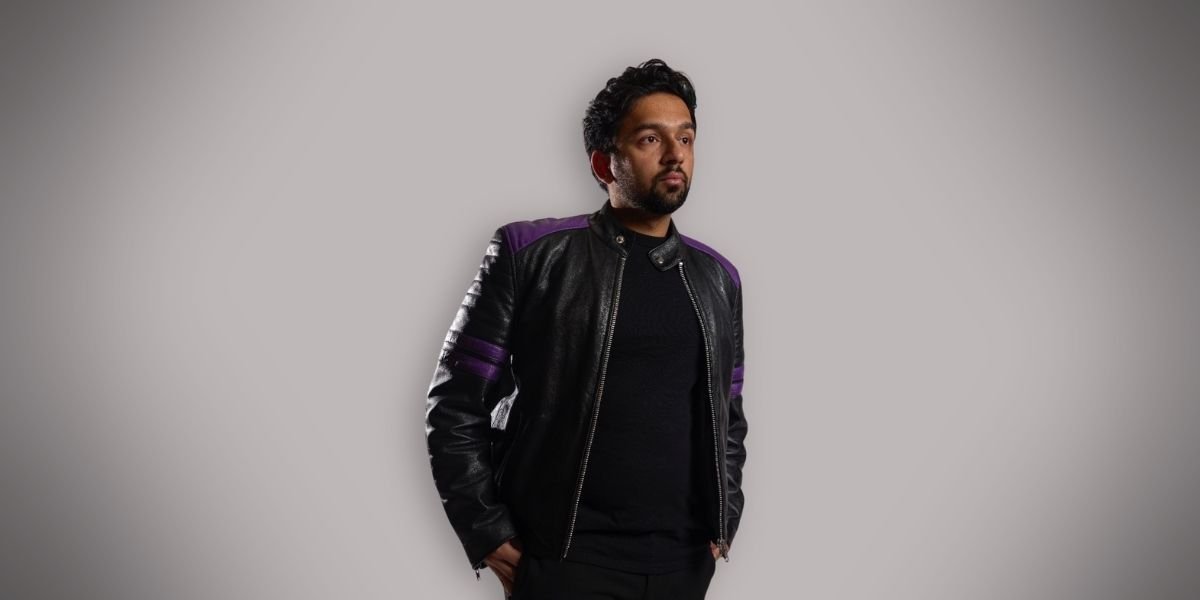
When Rohan Gurram opened his phone one morning, he did not expect what he saw.
It was not a fundraising inquiry, a speaking invitation, or a congratulatory message marking another startup milestone. What appeared on his screen instead was a death threat, written plainly and directed squarely at his identity as a South Asian founder.
The message was not subtle. It was hateful, explicit, and familiar in a way that many visible founders of color immediately recognize. It served as a reminder that attention often comes with risk, and that visibility can quickly turn into vulnerability when you look like him.
“It is sad that this is how our people are viewed,” Gurram later wrote publicly. “Being an Indian founder in tech comes with a level of hate most people never see. If I do not tell my story myself, someone else will. And they will tell it wrong.”
The message did not scare him.
It clarified him.
Before becoming the CEO of Cliqk, Rohan was a first-generation Indian kid searching for a sense of belonging that neither geography nor credentials could provide. He excelled academically and graduated from Yale University with degrees in Economics and Business, yet the question of identity followed him well beyond the classroom.
“I was too Indian for Americans and too American for Indians,” he once said. “So I built the middle ground myself.”
That middle ground eventually became Cliqk.
Cliqk is a marketing operating system designed to help founders, creators, and teams launch and manage their entire marketing ecosystem from one place. The platform enables one-click distribution across major social platforms, handles content creation, scheduling, and publishing, and provides a centralized dashboard for tracking revenue, deals, campaign performance, and real-time growth metrics.
Rather than forcing users to manage scattered tools and disconnected workflows, Cliqk is built to make marketing coordinated, measurable, and fast. Campaigns that normally take days to plan and execute can be launched in minutes, with clear visibility into what is running, what is working, and what is driving return.
Rohan describes Cliqk as infrastructure for cultural presence.
“Creators are companies, and companies are storytellers,” he explains. “Both need systems, data, and execution. That is what we build.”
Since the story was first shared, Cliqk has continued to attract attention from founders, creators, and teams interested in more unified approaches to managing marketing workflows. The platform has drawn a sizable waitlist, suggesting ongoing interest from users seeking simpler systems that emphasize coordination and visibility.
To build the platform, Gurram focused on assembling a founding team that reflected both technical depth and cultural range.
He brought on Alvin Pan, a former neurosurgical AI researcher who built reinforcement learning and video intelligence models at NYU Langone and Columbia University, to lead product intelligence. He partnered with Gary “Bolo” Sargeant, a music executive who helped shape the careers of artists including Beyoncé, J. Cole, Young Thug, and Megan Thee Stallion, to guide cultural and industry alignment. He also worked closely with Ilias Anwar, whose experience building large-scale creator and founder communities helped shape Cliqk’s approach to distribution and real-world relevance.
“Each one is world-class in their lane,” Gurram said. “Alvin brings precision. Bolo brings the industry. Ilias brings momentum. I build systems.”
Gurram has long been aware of how South Asian founders are positioned within the technology industry.
They are often expected to operate behind the scenes, to build quietly, and to let others take the spotlight. Rarely are they framed as storytellers or cultural leaders, even though they are foundational to global technology.
“Indians are the backbone of global tech,” he said. “But we are rarely the face of it. I want to change that.”
Cliqk reflects that ambition. The platform identifies rising talent and emerging brands through performance and cultural signals, then coordinates execution across channels in real time. Instead of treating public relations, influencer marketing, paid media, and events as disconnected efforts, Cliqk brings them together in a single system that scales without losing intent.
“We are not replacing human creativity,” Gurram explains. “We are making it scalable. AI gives creators time back. It gives them control.”
That death threat did not create Cliqk.
But it sharpened the reason for its existence.
“It reminded me why visibility matters,” he said. “If one Indian kid sees me building this, they will know they do not have to stay invisible.”
Cliqk is not just software.
It is a statement.
If you do not tell your own story, someone else will.
And they will tell it wrong.
“I do not want to be the exception,” Gurram says. “I want to be the example.”
As interest in the platform continues to grow, the story appears to resonate beyond the experience of a single founder.
And it may only be getting started.
Additional information about Cliqk is available at mycliqk.com.